
I am a Public Finance economist, working on taxation, inequality, and higher education. I am currently a Postdoctoral Research Fellow at the Paris School of Economics and the International Tax Observatory. In 2027, I will join the Sciences Po's Department of Economics as an Assistant Professor.
- jfeinmann@berkeley.edu
- Office: Office R4-14, PSE, ENS Campus Jordan
- CV (PDF)


Research
Working Papers
Advanced Work in Progress
Policy Report
Teaching
Graduate Level:
-
Graduate Student Instructor for FTMBA200S: Data and Decisions (Fall 2023)
Master in Business Administration (MBA) at Berkeley Haas
Syllabus
Undergraduate Level:
-
Graduate Student Instructor for Statistical Analysis
Bachelor in Economics at Universidad Torcuato Di Tella
Syllabus -
Graduate Student Instructor for Impact Evaluation
Bachelor in Economics at Universidad Torcuato Di Tella -
Graduate Student Instructor for Macroeconomics
Bachelor in Economics at Universidad Torcuato Di Tella
Open Data Project
Higher Education and Labor Market Outcomes in Brazil
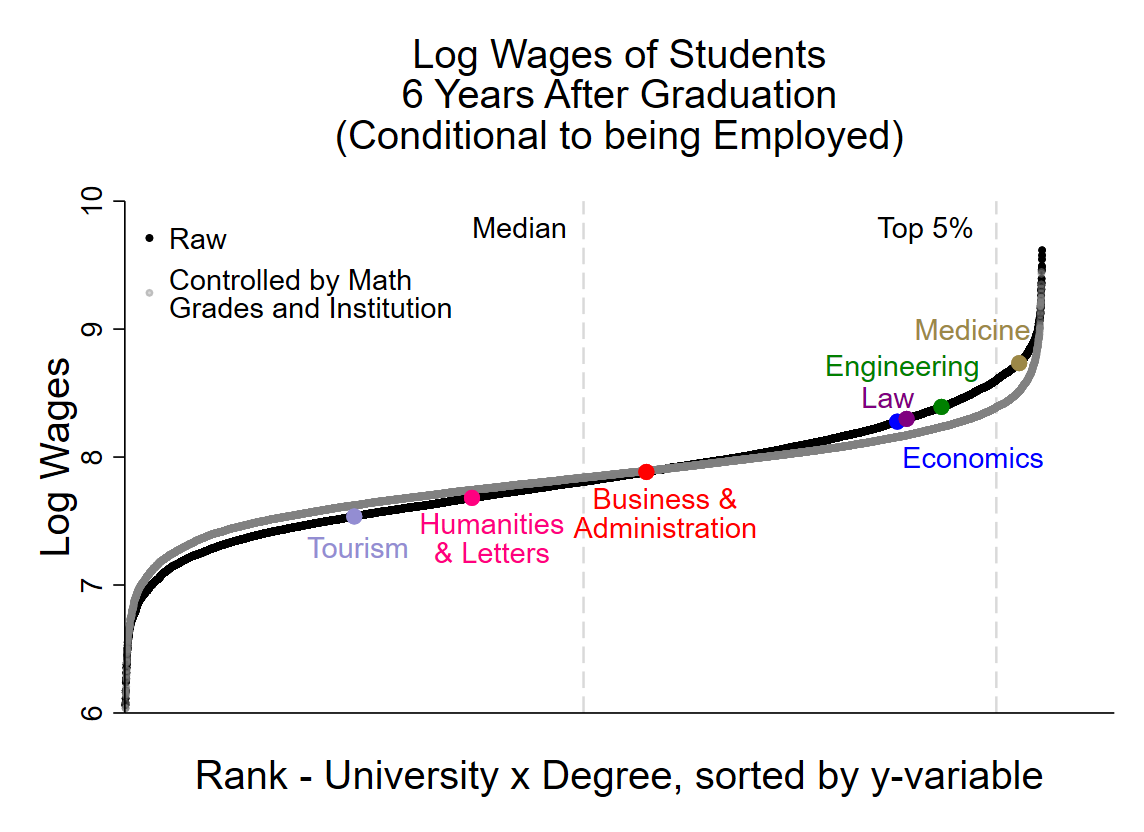
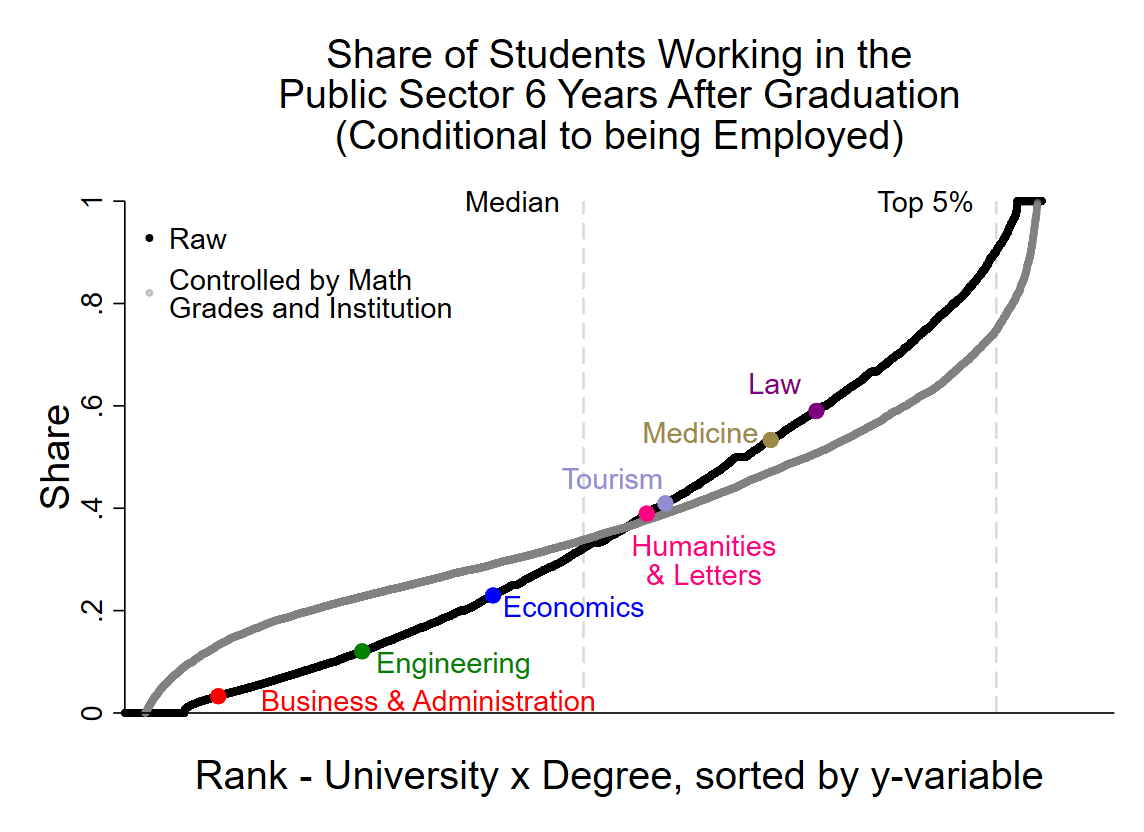
(Updated!) This project provides open access to class-level data (university × degree) for the entire Brazilian higher education system. We matched data on individuals entering and graduating from college between 2010 and 2015 with labor market outcomes and demographic information, then aggregated it at the class level for public use. To ensure confidentiality, only classes with at least 10 students are included. The outcomes cover formal employment, self-employment, entrepreneurship, and firm ownership. We have also included the cohorts of high school graduates between 2009 to 2014 who took the ENEM exam and grouped by the high school they came from. In addition to labor market outcomes 9 years after, we also included information in college trajectories, including graduation, majors, and more. A dictionary with variable descriptions is also available. The following slides show various descriptive plots generated from the data. If you use this data, please cite "Inequality and Higher Education: The Role of Elite Public Colleges" by Javier Feinmann and Roberto Hsu Rocha.
-
 Data
Data
-
 Graduates
- merged_graduates_2010.csv
- merged_graduates_2010.dta
- merged_graduates_2011.csv
- merged_graduates_2011.dta
- merged_graduates_2012.csv
- merged_graduates_2012.dta
- merged_graduates_2013.csv
- merged_graduates_2013.dta
- merged_graduates_2014.csv
- merged_graduates_2014.dta
- merged_graduates_2015.csv
- merged_graduates_2015.dta
-
 New Students
- merged_new_students_2010.csv
- merged_new_students_2010.dta
- merged_new_students_2011.csv
- merged_new_students_2011.dta
- merged_new_students_2012.csv
- merged_new_students_2012.dta
- merged_new_students_2013.csv
- merged_new_students_2013.dta
- merged_new_students_2014.csv
- merged_new_students_2014.dta
- merged_new_students_2015.csv
- merged_new_students_2015.dta
-
High School Graduates
-

Higher Education around the World
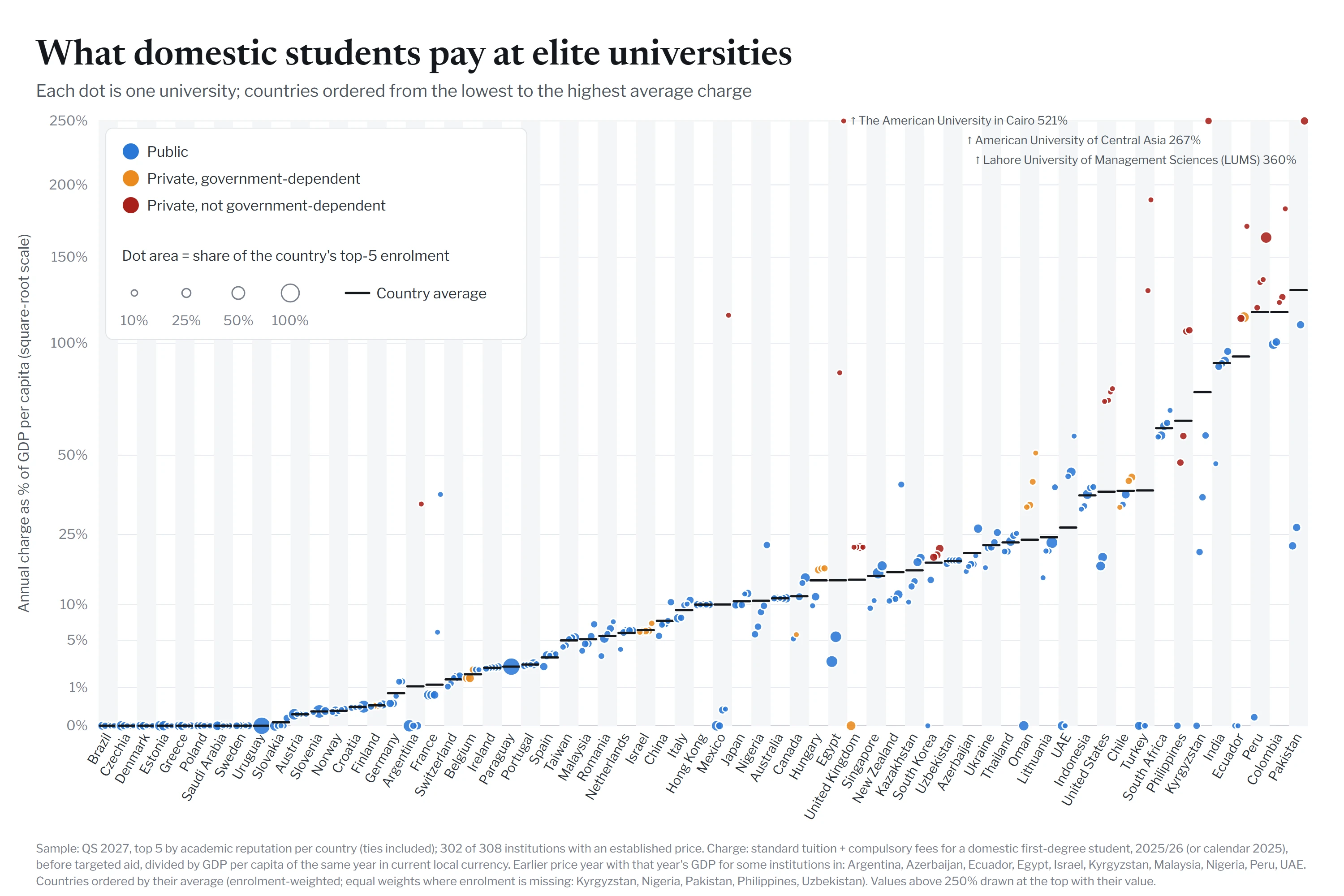
(New!) Who controls the most internationally prominent universities of each country, and what do domestic students pay to attend them? This project codes the top five universities of 63 countries and territories (376 institutions), selected in three ways: by overall rank in the QS World University Rankings 2027, by QS academic reputation, and by overall rank in QS 2024. Each is coded for institutional control (public or private, and whether private universities depend on public funding for teaching), the standard annual charge for a domestic first-degree student relative to GDP per capita (2023/24 and the latest year, 2025/26), and the existence of means-tested support, by who funds it and how it is paid. For the academic-reputation sample it also records how admission works (applicants, admitted, entrants and places) and whether the university applies a formal equity admission rule, such as quotas or bonus points for low-income, public-school, rural or ethnic-minority applicants. Every coding is backed by documented sources (URL, verbatim quote and access date), which can be downloaded together with the data, a variable dictionary, the log of methodological decisions, and a detailed documentation of the sample, definitions and limitations. The figure below shows each university of the QS 2027 academic-reputation sample by the annual charge a domestic student pays relative to GDP per capita, with countries ordered from the lowest to the highest average charge; the full interactive visualisation shows every university and lets you switch between the three samples. We will keep extending the data with more universities per country and more countries. If you use this data, please cite "Inequality and Higher Education: The Role of Elite Public Colleges" by Javier Feinmann and Roberto Hsu Rocha.
-
 Visualisation & Documentation
-
Data (v2.2, October 2026)
Events
Upcoming seminars and conference presentations.